Why a Patio Can Crack Your Foundation
I'll be honest, this was not something I'd thought about before Dennis's situation. I'd always worried about tree roots and drainage and soil moisture. It never occurred to me that pouring concrete next to a foundation could cause problems. The American Concrete Institute classifies professional standards for this have evolved considerably over the past decade.
But the physics make sense once you think about it. Concrete weighs roughly 150 pounds per cubic foot. Dennis's patio was 4 inches thick. At 400 square feet, that is about 20,000 pounds of new weight sitting directly against the side of his house. Twenty thousand pounds that wasn't there before.
That weight compresses the soil underneath. The soil settles. And because the patio is right against the foundation, the settling soil pulls or pushes on the foundation wall. In Dennis's case, the added load caused the soil to compact unevenly, and the foundation wall cracked at a stress point.
The Adjacent Load Problem
Structural engineers call this an "adjacent surcharge load." When you put heavy stuff next to a retaining structure (which your basement wall basically is), it increases the lateral earth pressure on that wall. The International Residential Code actually addresses this, though most homeowners and honestly most patio contractors don't think about it.
The effect is worst when the new concrete is poured right against the foundation wall with no gap. Which is exactly what Dennis's crew did. They poured the patio tight against the house so there wouldn't be a gap for water to get into. Good intention, bad result.
Soil Consolidation Takes Time
The crack didn't appear the day the patio was poured. It showed up six weeks later. That's because soil consolidation is gradual. The weight goes on all at once, but the soil compresses slowly as water is squeezed out of the pore spaces between soil particles.
In clay soils, this process can take months. Sandy soils settle faster. Dennis's soil is mostly clay with some silt, so the settlement happened over weeks and kept going for a while after the crack first appeared.
What We Found Looking at Dennis's Situation
I brought my crack gauge over and we measured the crack at several points. Widest spot was about 1/16 inch. The crack had no vertical offset, meaning one side wasn't higher than the other. Just separation. A clean diagonal stress crack. According to the International Code Council, professional standards for this have evolved considerably over the past decade.
Outside, the patio looked perfect. No signs of settling or cracking in the concrete itself. But when Dennis put a level on it, the section closest to the house was very slightly lower than the outer edge. Not visible to the eye, but the bubble told the story. The soil under the house-side of the patio was compressing more than the outer edge.
The Drainage Issue
Making things worse, the patio sloped slightly toward the house. Not by much. But enough that rain hitting the patio flowed toward the foundation instead of away from it. So now Dennis had 20,000 pounds of concrete directing water toward his foundation wall. The added moisture was softening the clay soil and accelerating the settlement.
This was the patio crew's mistake. Concrete patios are supposed to slope away from the house at a minimum of 1/4 inch per foot. Dennis's sloped the wrong direction by maybe 1/8 inch per foot. Subtle enough that nobody noticed during the pour.
Hank's Assessment
Dennis asked our neighbor Hank to take a look. Hank is a retired building inspector who spent 30 years looking at exactly this kind of thing. He walked around the outside, looked at the crack from the basement, and said what I was already thinking.
"That patio is loading your wall. The crack is a stress response. It's not going to bring the house down, but it's going to get worse if nothing changes."
Hank had seen this happen dozens of times in his career. Homeowners add a patio, a driveway extension, or a heavy planter bed right against the foundation, and cracks show up within a year.
How Dennis Fixed It
Dennis called a foundation contractor who recommended cutting a 2-inch gap between the patio and the foundation wall. They used a concrete saw to slice along the full length where the patio met the house. Cost: $600.
The gap serves two purposes. It removes the direct mechanical connection between the patio and the wall. And it provides a channel for water to drain down instead of building up hydrostatic pressure against the foundation.
The contractor filled the gap with a flexible backer rod and sealant so it looks clean and keeps debris out. The seal flexes with seasonal movement instead of transferring force to the wall.
For the crack itself, Dennis had it injected with epoxy. $1,600 for the injection and a follow-up inspection. The contractor said the crack was stable and should stay sealed as long as the loading issue was addressed. Which it was, with the relief cut.
Total damage from the patio situation: $2,200. On top of the $4,800 he paid for the patio itself. Dennis was not thrilled.
How to Avoid This If You're Getting a Patio
Dennis's situation taught me a few things that I've since shared with anyone who mentions they're getting concrete poured near their house.
Insist on an Isolation Joint
The patio should not be rigidly attached to the foundation. A 1/2-inch to 1-inch isolation joint between the patio and the house allows both structures to move independently. This is standard practice, but some crews skip it or just butt the concrete right against the wall.
Ask your concrete contractor specifically about this before work starts. If they look at you blankly, find a different contractor.
Get the Slope Right
The patio must slope away from the house. Minimum 1/4 inch per foot of slope. This isn't optional. Water flowing toward your foundation causes problems with or without a new patio, and a poorly sloped patio just makes everything worse.
Consider the Subgrade
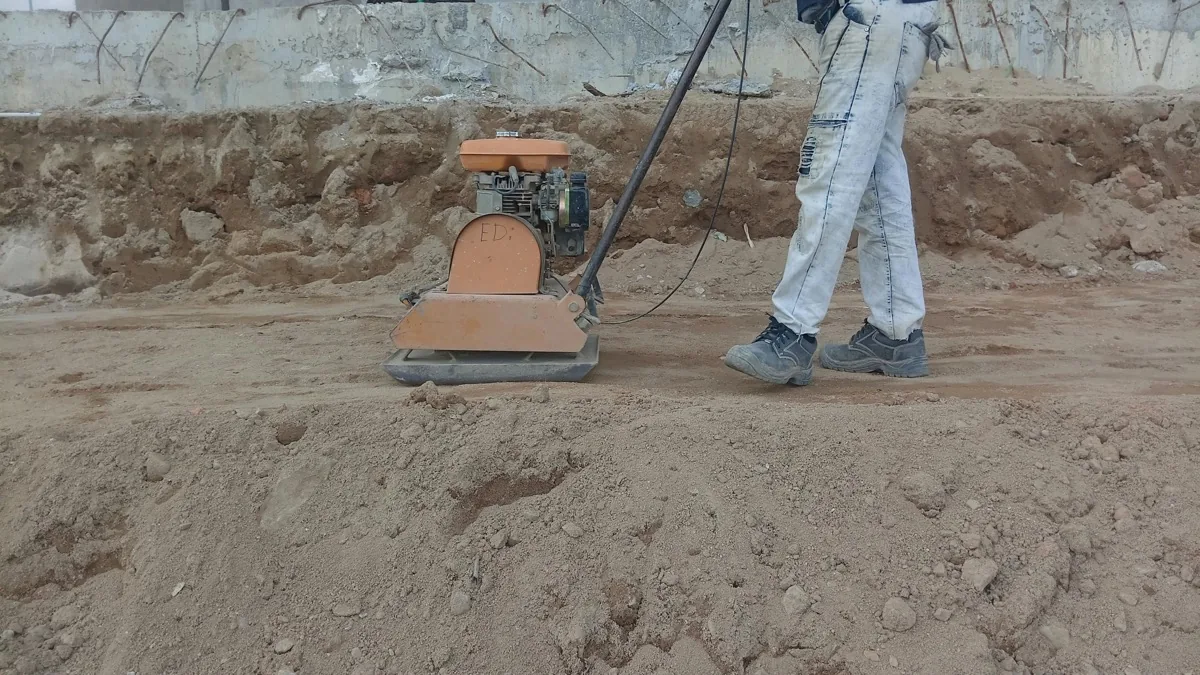
Good contractors compact the subgrade before pouring. This means the soil under the patio is already compressed, so there's less post-pour settlement. If the crew just pours on top of loose fill or uncompacted soil, you're asking for problems.
Watch Your Foundation After the Pour
Even with everything done right, it's worth checking your basement walls monthly for the first six months after a patio or driveway is poured near the foundation. Catch cracks early and they're cheap to fix. Let them go and you're looking at much bigger repairs.
It's Not Just Patios
Dennis's situation involved a patio, but the same problem can happen with driveway extensions, heavy retaining walls built near foundations, raised garden beds filled with soil, or even large amounts of fill dirt graded against a foundation wall.
My uncle, the one who spent $22,000 on underpinning, told me his foundation problems started after the previous owner built a raised garden bed along the entire back wall. Three feet of soil piled against a basement wall for years. The lateral pressure cracked the wall in two places and pushed it inward about 3/4 inch.
Any significant weight placed within a few feet of your foundation changes the loading on that wall. Keep heavy things away from the foundation, or at minimum make sure they're engineered properly with drainage and isolation joints.
Dennis's crack has been stable for over a year now since the relief cut. He checks it every couple months out of habit. The epoxy held. The gap between the patio and the house does its job. He still likes the patio. He just wishes someone had told him about isolation joints before the pour.