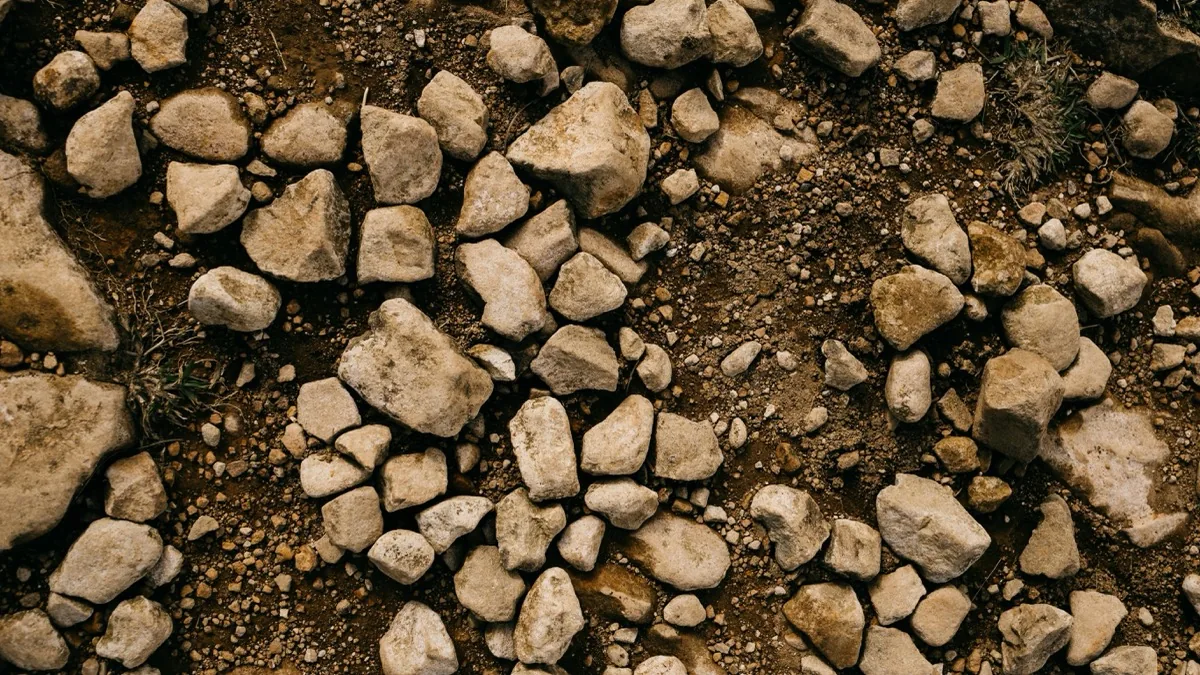
The Mechanics of Soil Shrinkage
Most foundation damage from drought traces back to a single physical process: clay particles losing water and the soil mass contracting as a result. The amount of contraction depends on the clay content of the soil and the moisture deficit. Sandy soils barely shrink at all when they dry. Pure clay soils can lose 15 to 25 percent of their volume in extreme cases. Most natural soils fall somewhere in between.
Why Clay Behaves This Way
Clay particles are flat plates with charged surfaces. Water molecules wedge between the plates and hold them apart. When water leaves the soil through evaporation or root uptake, the plates collapse closer together, and the bulk soil volume drops. This is reversible when water returns, which is why clay soils swell again after rainfall. The U.S. Geological Survey publishes detailed soil moisture data showing how dramatically clay soils respond to drought across the United States.
The clay type matters as much as the amount. Smectite clays (the kind found in expansive soils across Texas, Oklahoma, and parts of the South and Midwest) can change volume by 20 percent or more between fully saturated and bone dry. Kaolinite clays (more common in the Southeast) change volume by only 5 to 10 percent under the same conditions. A homeowner in Dallas and a homeowner in Atlanta can both be on clay soil and have very different drought responses.
Depth of Influence
Drought-driven moisture loss is not uniform with depth. The top 6 to 12 inches of soil dry out quickly during any extended dry period. Moisture loss deeper than that is much slower, and during ordinary droughts the soil more than 36 inches down stays close to its long-term average moisture content. Severe multi-year droughts can drive the moisture deficit deeper, sometimes 6 feet or more, which is when foundation damage becomes catastrophic.
Slab foundations are most vulnerable to surface-zone movement because they sit directly on the soil that dries first. Basement foundations are partially insulated from surface drying because their walls extend below the active zone, but the soil at the wall base can still lose moisture and create voids that lead to settlement.
Tree Root Acceleration
Trees dramatically increase the depth and severity of drought-driven moisture loss. A mature oak or elm can transpire several hundred gallons of water per day, pulling moisture from soil 20 to 40 feet from the trunk and as deep as the roots extend. During drought, when surface evaporation is also at its peak, a foundation within the root zone of a large tree experiences soil shrinkage that would not happen on the same property without the tree.
This is why removing a mature tree near a foundation can sometimes trigger foundation movement years later. The roots die back, the soil that was held in a low-moisture state by the tree slowly rehydrates, and the foundation that adapted to the dry soil now sits on swelling soil. The reverse problem of planting a fast-growing tree too close to a foundation is even more common.
How Foundations Respond to Shrinking Soil
When soil shrinks under a foundation, the foundation does one of three things. It moves with the soil, it bridges the gap and develops a void underneath, or it cracks at the point where it cannot do either. Which response happens depends on the foundation type, the construction quality, and the pattern of soil movement.
Settlement vs. Differential Settlement
Uniform soil shrinkage across an entire foundation produces uniform settlement. The whole house drops a fraction of an inch, but it remains level and the foundation stays intact. Uniform settlement of less than an inch is usually invisible to homeowners and does no real damage.
The problem is that drought rarely affects soil uniformly. A house with a tree on one side and an open lawn on the other will have asymmetric soil drying. A house with poor drainage on one side may have one wetter and one drier side even during drought. The mismatch causes differential settlement, where one part of the foundation drops and another does not. Differential settlement is what produces visible cracks.
Common Crack Patterns
Diagonal cracks running from the corner of a window or door up toward the rim joist are the classic drought-driven crack pattern. They appear because the foundation corner has settled relative to the rest of the wall, and the rigid window frame creates a stress concentration where the crack starts. Stair-step cracks following the mortar joints in brick veneer are another common pattern, particularly on brick chimneys that have settled away from the main house mass.
Slab foundations develop a different crack pattern. Surface cracks in slabs after drought often radiate outward from interior points where the soil has shrunk away from the underside of the slab. Tile floors crack along the lines of these stress points. Doorways that no longer line up properly are often the first noticeable symptom inside a house with slab settlement.
Timing of Drought Damage
Foundation cracks from drought rarely appear during the drought itself. The damage progression usually follows a predictable timeline that homeowners can use to anticipate when symptoms will show up.
Phase 1: Active Drought (Months 1 to 6)
During an active drought, soil moisture drops steadily. Foundations may settle imperceptibly, but visible damage is uncommon in this phase. Homeowners might notice that lawns are stressed and that the soil around the foundation is pulling away from the wall, creating visible gaps. These soil-to-foundation gaps are the first sign that future movement is likely, but the foundation itself is usually still intact.
Phase 2: Late Drought (Months 6 to 12)
This is when most drought-driven cracks first appear. Cumulative settlement has reached the point where stress concentrations in the foundation exceed the material's tensile strength. Cracks open at corners, doors begin to stick, and homeowners start noticing things are not right. The timing is often August through October in the United States, after a hot dry summer has stressed soils to their limits.
Phase 3: Drought-to-Rain Transition
The most damaging single event is often not the drought itself but the rapid transition out of it. When several inches of rain fall on bone-dry clay soil over a short period, the clay rehydrates and swells aggressively. Foundations that have settled into the dry soil now have to move upward, or develop cracks where they cannot. Cracks that opened during the drought often grow wider during the rapid re-expansion phase. The U.S. Drought Monitor tracks these transitions weekly, and the homeowner-relevant pattern is that drought followed by abrupt heavy rainfall is worse than steady drought.
Regional Vulnerability
Not every part of the country is equally vulnerable to drought-driven foundation damage. The vulnerability depends on soil composition, climate patterns, and typical drought severity. Some regions see drought damage as a routine concern. Others rarely see it.
The states with the highest drought-foundation risk are Texas, Oklahoma, Kansas, parts of Louisiana, central California, and the Atlanta metro area. These regions combine expansive clay soils with climates that produce extended dry periods. Homeowners in these areas should treat drought as an active foundation hazard rather than a lawn-care concern. States with sandy soils (most of Florida, coastal Carolinas) or with less seasonal drought variation (Pacific Northwest) see far less drought-driven foundation damage. The National Weather Service Advanced Hydrologic Prediction Service publishes regional soil moisture data that helps illustrate which areas are most affected.
Reducing Drought Damage Risk
Once drought damage is in progress, options are limited. But there are preventative measures that work, and they are cheap compared to foundation repair. The most effective single measure is foundation perimeter watering.
Soaker Hose Perimeter Irrigation
A soaker hose laid 12 to 18 inches from the foundation and run for 30 to 60 minutes a few times per week during drought keeps the soil moisture in the active zone closer to normal. The goal is not to flood the soil but to prevent the dramatic moisture loss that causes shrinkage. State extension services in Texas, Oklahoma, and Kansas all publish detailed homeowner guides recommending this practice during drought. It costs almost nothing compared to the potential damage it prevents.
Tree and Vegetation Management
Mature trees within 30 feet of a foundation should be considered drought risk factors. Removing them is not usually the answer (the risk of post-removal swelling is real), but understanding which direction the roots extend and supplementing soil moisture in those zones during drought can help. New plantings should be selected with mature root spread in mind and located far enough from the foundation to keep the active root zone clear.
Drainage Management
During the brief but intense rain events that often follow drought, drainage matters more than usual. Gutters and downspouts should be clear and direct water at least 6 feet from the foundation. Soil grading should slope away from the house. The faster the rain runs off and the more slowly the foundation soil rehydrates, the less stress the foundation experiences during the transition.