1950s and Early 1960s Construction
Homes built in the 1950s and early 1960s typically have concrete masonry unit (CMU) block foundations, often without modern waterproofing membranes. Block walls were the dominant residential foundation type during the post-war housing boom because they were faster and cheaper than poured concrete and required less skilled labor.
The most common crack pattern in 1950s block walls is the horizontal step crack. This follows mortar joints in a stair-step pattern, climbing diagonally across the wall. It usually appears on walls facing the prevailing wind direction or on walls with heavy soil pressure. These cracks indicate lateral soil pressure exceeding the wall's resistance, often combined with mortar deterioration after 60+ years.
What to Watch For
In homes from this era, horizontal cracks running parallel to the floor through the middle of the wall are more serious than stair-step cracks. Horizontal cracks indicate bowing or wall failure under pressure. The International Code Council references for masonry wall assessment typically flag bowing greater than 1 inch over a 6-foot section as requiring structural review.
Late 1960s Through 1970s Construction
The late 1960s saw the transition from block walls to poured concrete foundations in many markets. Concrete pours became more practical as ready-mix delivery improved and forming systems standardized. By the late 1970s, poured concrete dominated new construction in most regions.
Poured concrete walls from this era often show vertical shrinkage cracks. These appear within the first few years after construction as the concrete cured and shrank. By now, these cracks are decades old and almost always stable. They are typically narrow (1/16 inch or less) and run from the floor up to just below the rim joist.
1970s homes also commonly show diagonal cracks at corners where two foundation walls meet. These often relate to differential settlement between the perimeter walls and any interior bearing walls.
1980s Construction
The 1980s introduced more consistent quality control in residential concrete work, but also saw increased use of reinforcing steel in foundation walls. Most 1980s foundations are poured concrete with at least minimal rebar reinforcement.
Typical 1980s crack patterns include vertical shrinkage cracks similar to 1970s homes, but often narrower because of improved concrete mix designs. Diagonal cracks near windows and doors are common in 1980s construction because window cutouts created stress concentrations during curing.
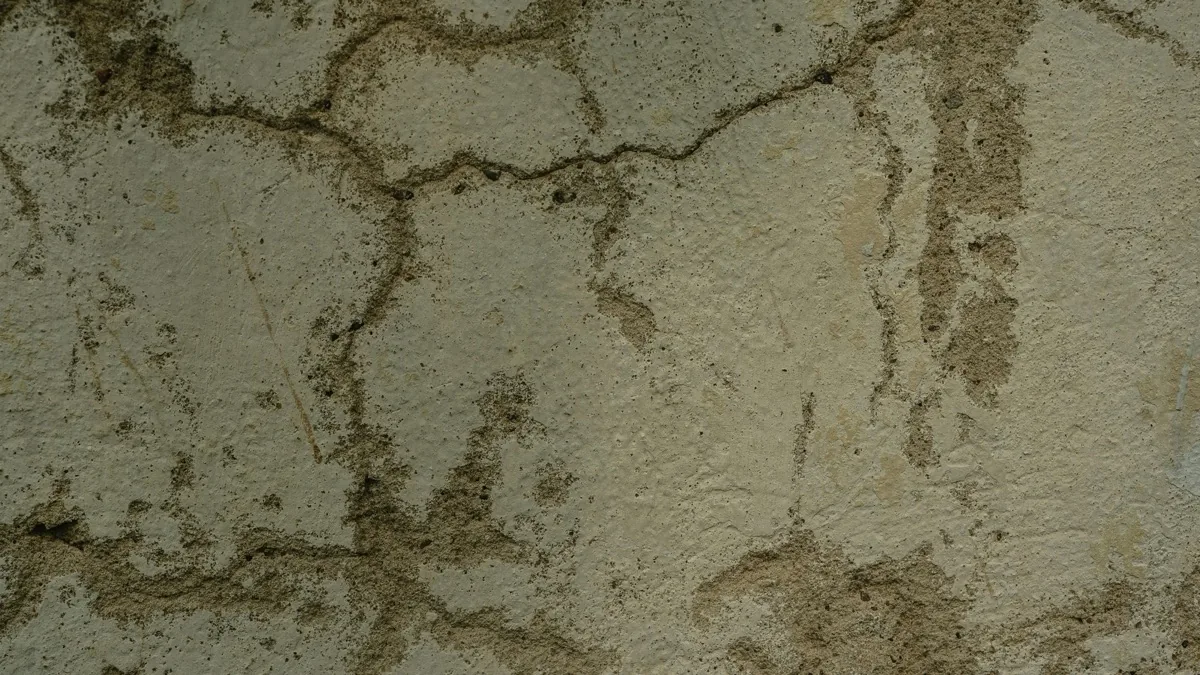
Some 1980s homes show what are sometimes called map cracks, which are networks of fine cracks across the wall surface. These usually indicate finish quality issues rather than structural problems.
1990s Through Early 2000s Housing Boom
The 1990s and early 2000s housing boom created some unique foundation issues. The pace of construction in many markets meant that concrete walls were sometimes poured in stages or with significant delays between sections. This created cold joint cracks at the interfaces.
Cold joint cracks are usually horizontal and follow the line where one concrete pour met the next. They often appear in the first 5 years and remain stable thereafter. They look concerning but rarely indicate structural problems.
The boom era also saw increased use of insulated concrete forms (ICFs) in some markets. ICF foundations have different crack patterns because the concrete is contained within foam insulation that obscures direct visual inspection.
Soil Preparation Issues
Many boom-era subdivisions were built on land that was rapidly graded with limited time for soil compaction. This caused settlement issues that emerged 5 to 15 years after construction as the fill compacted. Homes in these subdivisions sometimes show diagonal settlement cracks that were not present during the first few years of occupancy.
2010s and Recent Construction
Modern foundation construction (2015 to present) typically uses higher-strength concrete mixes, more consistent reinforcement patterns, and engineered control joints designed to direct shrinkage cracking to predictable locations.
When modern foundations crack, they often crack at the intended control joint locations, which is exactly what the design predicts. These cracks look intentional because they are intentional. They are not foundation failure, they are engineered crack management.
What is unusual in modern construction is cracks that appear away from control joints. These can indicate soil issues, construction defects, or unusual loading conditions. Modern homes with cracks in unexpected locations deserve professional evaluation more readily than older homes with predictable age-related cracking.
Cross-Era Patterns Worth Knowing
Some crack patterns appear in homes of any age and have similar significance regardless of construction era:
- Stair-step cracks in brick veneer: Almost always cosmetic in any era. The brick is decorative, not structural.
- Hairline vertical cracks: Common in poured concrete of any age. Usually stable, usually not concerning.
- Horizontal cracks at the top of basement walls: Always merits attention regardless of home age. Indicates lateral pressure issues.
- New cracks alongside old established cracks: Pay attention to the new ones in any era. They indicate ongoing movement.
For homes older than 80 years, expect to find some foundation cracking. The question is whether the cracking represents ongoing problems or just the cumulative history of decades of soil movement. A 1925 stone foundation with multiple cracks that have been stable for 40 years is in a completely different category from a 1995 poured wall with a new crack last year.