What Honeycombing Actually Is
When concrete is poured into a foundation form, the mixture has to flow around rebar, fill every corner of the form, and consolidate properly so that the cement paste binds to the aggregate. Workers use vibrators (long metal probes that shake the wet concrete) to settle the mix and push out air pockets. When this consolidation step is rushed or skipped, you get honeycombing.
The visible result is a patch of wall where you can see the individual pieces of gravel and stone with empty space between them. Sometimes the voids are shallow and decorative-looking. Other times they go deep enough that you can stick a finger or even a pencil into the wall.
Identifying Honeycombing vs. Cracks
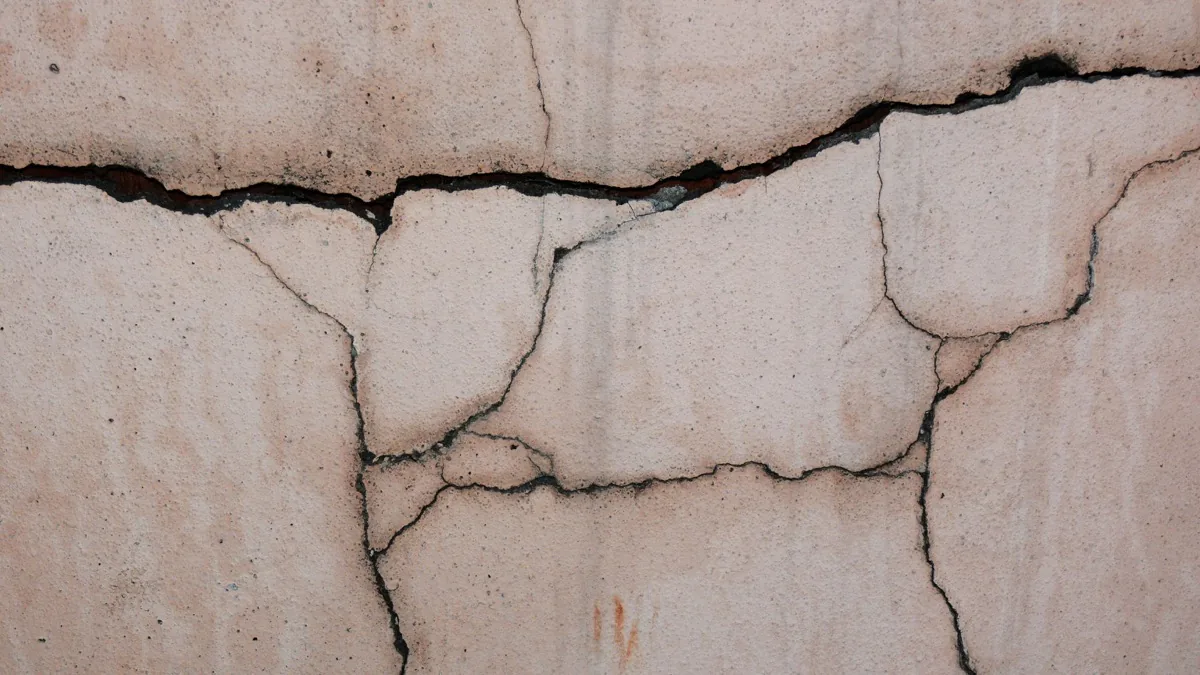
Honeycombing has no linear path. A crack starts somewhere and ends somewhere, with a clear length and direction. Honeycombing is irregular, blotchy, and confined to a specific area, usually near the bottom of a wall, around window penetrations, or beside rebar. The texture is rough and aggregated rather than the clean fracture surface of a crack.
Common Locations
Look near the bottom of basement walls within the first three feet of the floor. This is where the concrete had the longest distance to flow during the pour, and gravity pulled the heavier aggregate down faster than the paste could follow. Honeycombing is also common around window wells, beam pockets, and anywhere rebar density was high.
When Honeycombing Is Cosmetic
If the affected area is shallow (less than a half inch deep), if there is no exposed rebar, and if the wall shows no signs of water intrusion or active settlement, the honeycombing is almost always cosmetic. The structural capacity of a poured concrete wall comes from the rebar grid inside it, and surface honeycombing does not compromise that grid as long as the rebar itself remains buried in sound concrete.
I have seen honeycombing in 1960s foundations that has been there for sixty years without any progression. The concrete around it is solid. The wall is still doing its job. The only real concern is appearance, and most homeowners just paint or seal over it.
When Honeycombing Is Structural
The two situations that elevate honeycombing from cosmetic to structural are exposed rebar and water seepage. Once rebar is exposed, it begins to rust. Rust takes up more volume than steel, and over years it can begin to spall the surrounding concrete, weakening the wall. The International Code Council publishes specific guidelines on minimum concrete cover for rebar, and any honeycomb void that breaches that cover should be addressed.
Water seepage through honeycomb voids is the second concern. Water will accelerate rebar corrosion and can also wash out fines from the concrete over time. If you see white mineral deposits (efflorescence) around the honeycomb area, water is moving through it.
Repair Options
For shallow cosmetic honeycombing, a patch with bonding agent and non-shrink grout will fill the voids and restore a uniform wall surface. A homeowner can do this with materials from any hardware store for under $50. For deeper voids that approach or expose rebar, the repair becomes more involved. The void needs to be cleaned out completely, any rusted rebar treated with a corrosion inhibitor, and then filled with a structural repair mortar in lifts to ensure full consolidation.
If water is actively moving through the wall, the repair sequence has to start with addressing the source of water and sealing the wall from the exterior or with an interior crystalline waterproofing product. Otherwise the patch will fail.