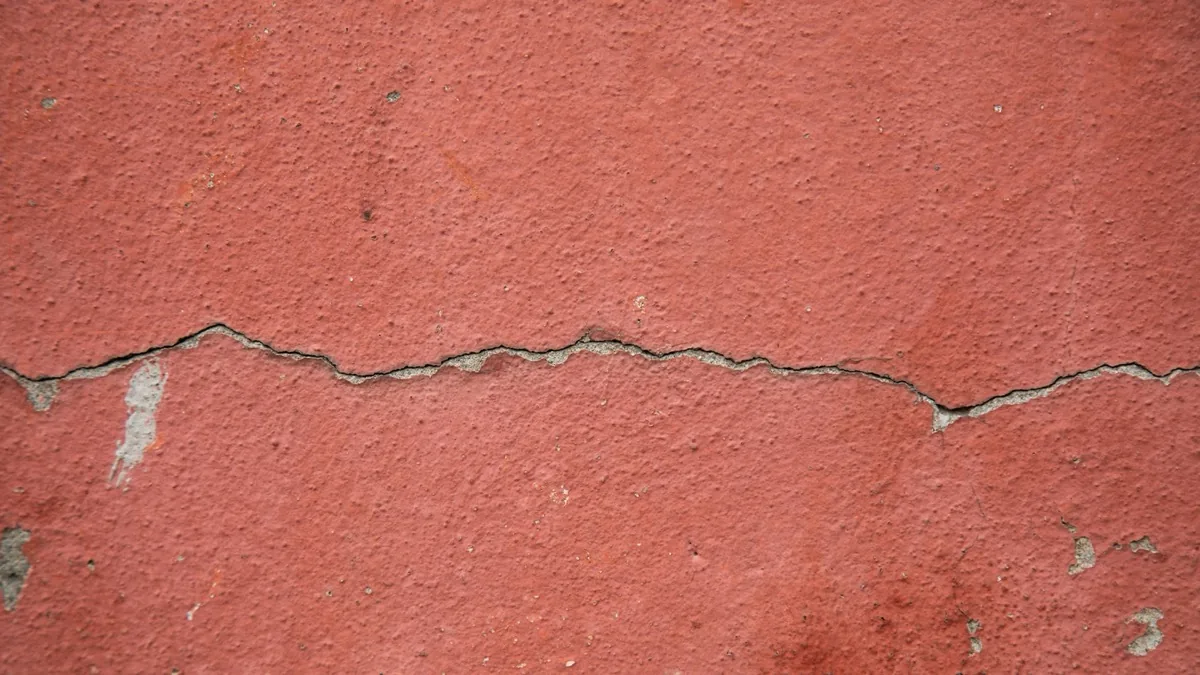
Why Horizontal Cracks Are Different
After Roger's disaster, I did a deep dive on foundation cracks. Talked to the engineer who assessed his wall. Talked to my buddy Ray again. Here's what makes horizontal cracks the bad kind. The American Concrete Institute classifies these types of issues are more common than most homeowners realize.
The Physics of It
Your foundation wall is basically standing up against a constant push from the soil outside. When that soil gets wet, it expands. When it freezes, it expands even more. All that pressure pushes horizontally against the wall.
The wall is anchored at the top (to your house) and the bottom (to the footing). So when it starts to give, it gives in the middle. That's why horizontal cracks usually appear about halfway up the wall, roughly 3 to 5 feet from the floor.
The engineer drew a picture for Roger. Showed how it's like bending a credit card. Push on the ends, the middle bows out. Same thing with a wall under horizontal pressure.
What Roger's Crack Looked Like
When I first saw it, it ran almost the entire length of his back wall. Maybe 20 feet. It followed a mortar joint because Roger has a block foundation. The blocks themselves weren't cracked, just the mortar between them.
The scary part wasn't the crack itself. It was when I held a level against the wall. You could see the bow. Maybe an inch and a half at the worst point. That's significant movement.
How This Happens
The contractor who fixed Roger's wall explained the usual causes. Made me paranoid enough to check my own basement. According to the International Code Council, homeowners should document conditions before consulting contractors.
Water-Logged Soil
Roger's gutters were a mess. Clogged, overflowing, dumping water right at the foundation. That water soaked into the clay soil around his house. Clay expands when wet. A lot. The contractor said clay soil can swell 10% or more. That's an enormous amount of pressure against a wall that wasn't designed for it.
Frost Pressure
We're in the Midwest. Winters are brutal. The contractor pointed out that frozen soil expands too, and our frost line goes down about 42 inches. Roger's basement window wells were acting like little bathtubs, collecting water that would freeze against the wall every winter.
Year after year of freeze-thaw cycles, each one pushing a little harder. Eventually something gives.
That RV Didn't Help
Roger parked his RV alongside the house every winter. Right next to the wall that failed. The contractor mentioned that heavy loads near the foundation add lateral pressure. Probably didn't cause the problem, but definitely didn't help.
What to Look For
After Roger's experience, I check my own walls every spring. Here's what the contractor taught me to look for.
The Level Test
Get a 4-foot level. Hold it vertically against the wall at several points. If you see a gap between the level and the wall, you've got some bow. An inch or less might be old and stable. More than that, and especially if it's getting worse, that's a problem.
My walls have maybe a quarter inch of bow in a couple spots. Been that way since I bought the house. I mark them and check once a year. No change in four years.
The Crack Width
Honestly, width matters less than movement. Roger's crack wasn't that wide, maybe 1/4 inch. But the wall behind it was moving. That's what made it serious.
If you can see the crack getting wider over months, or if the bow is increasing, those are the red flags.
Fresh Damage Signs
Is there concrete dust on the floor near the crack? That means recent movement. Are the crack edges sharp and clean? That's newer than smooth, weathered edges.
Roger's crack had been there for years, but the dust on the floor was new. That's what should have told him things were getting worse.
What Roger's Repair Cost
Since I watched the whole process, I can tell you exactly what happened.
The Emergency Situation
By the time Roger called someone, the wall had bowed about 2.5 inches. The contractor said they could stabilize it but probably couldn't fully straighten it at this point. Too much movement had already happened.
They installed steel I-beams every 4 feet along the wall, anchored to the floor and the floor joists above. Eight beams total. Labor plus materials: $11,400.
What It Would Have Cost Earlier
If Roger had called when the crack first appeared, before significant bowing, they could have installed carbon fiber straps instead. Those are way cheaper. The contractor estimated $3,500-4,500 for the same wall length.
Carbon fiber straps are thin, almost invisible once installed, and they prevent the wall from bowing further. But they only work if the wall hasn't moved much yet. Roger was past that point.
Plus the Drainage Work
Fixing the wall doesn't fix the cause. Roger also had to pay to fix his gutters, extend his downspouts, and improve the grading around the house. Another $2,200 or so.
Grand total: About $13,600. For something that started as a crack he could have addressed for under $5,000.
My Advice After Watching This Disaster
Horizontal cracks aren't automatic emergencies. But they're not something to ignore either.
Get It Looked At
If you have a horizontal crack, especially one that runs more than a few feet, get a structural engineer to look at it. Not a foundation repair company. An engineer. They'll tell you if it's stable or if it's moving.
Cost is usually $300-500. That's nothing compared to what Roger paid for waiting.
Fix the Cause First
Check your gutters. Check your downspouts. Check the grading around your foundation. Water management is everything with horizontal cracks.
I spent $150 on gutter extensions after seeing Roger's mess. Best $150 I've ever spent.
Don't Wait Like Roger Did
He admits it now. He knew something was wrong but didn't want to spend the money. Every time I see those steel beams in his basement, I think about how much he could have saved.
The crack didn't kill his house. The waiting did.