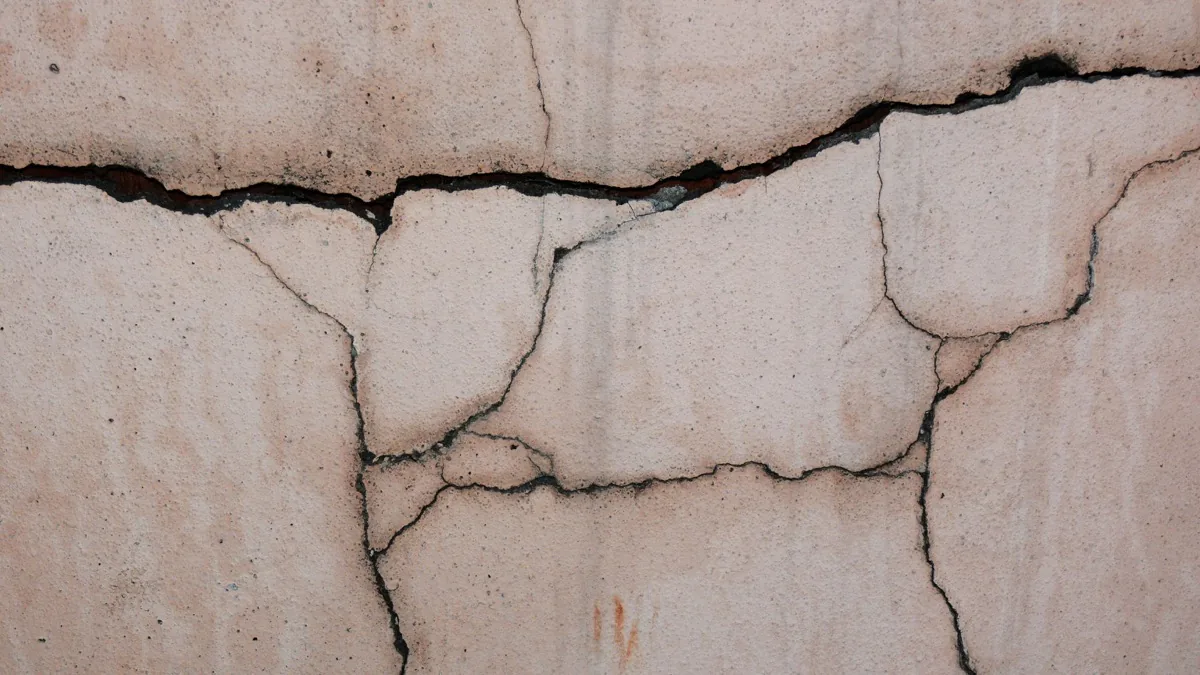
Quick Comparison
| Indicator | Old Cracks | New Cracks |
|---|---|---|
| Edge texture | Smooth, weathered | Sharp, clean |
| Color match | Same as surrounding wall | Lighter, fresh-looking |
| Paint/coating | Painted over, continuous | Paint cracked or separated |
| Dust/debris | Dirty, cobwebs possible | Fresh concrete dust |
| Floor below | Clean | May have debris |
Signs of Old Cracks
Old cracks have a settled, integrated look. They've become part of the wall. According to the International Code Council, professional standards for this have evolved considerably over the past decade.
Weathered Edges
Run your finger along the crack edge. Old cracks feel smooth, almost polished. Decades of dust, moisture, and air have softened the sharp edges that concrete has when fresh.
All my cracks feel like they've been sanded. That's 45 years of doing nothing.
Paint Evidence
If the walls have been painted, look at how the paint interacts with the crack. Old cracks were painted over. The paint continues into the crack and follows the contours. It might be cracked along the line, but it's clearly been there through at least one paint job.
My cracks show multiple paint layers in the crack itself. Someone painted over them in the 80s, then again later. That's decades of history.
Color Match
Old cracks blend in. The exposed concrete inside the crack has aged to match the surrounding wall. Same gray tone, same weathered look.
Fresh concrete is lighter. A new crack through old concrete shows a color contrast between the fresh break and the aged surface.
Dirt and Debris
Old cracks collect dust, cobwebs, sometimes even small mineral deposits. They look lived-in. The crack has been there long enough for stuff to accumulate.
Signs of New Cracks
New cracks look fresh and raw. They haven't had time to weather.
Sharp Edges
Fresh concrete breaks are sharp. Run your finger along a new crack and you'll feel distinct edges. They haven't been softened by time.
When my neighbor down the street had a new crack appear, the edges were almost knife-like. Nothing like the smooth edges on my 45-year-old cracks.
Fresh Concrete Dust
Active cracking creates debris. Look at the floor directly below a crack. If there's concrete dust or small particles, the crack has been moving recently. That dust didn't come from nowhere.
Ed noticed dust on his floor months before he realized his wall was bowing. The crack was still active, grinding material every time it moved slightly.
Color Contrast
New cracks expose fresh concrete that's lighter than the weathered surface. The contrast is obvious. It's like a fresh wound versus an old scar.
Paint Separation
If walls are painted, a new crack breaks through the paint. You'll see paint pulling apart, separating at the crack line. The crack came after the paint, not before.
This is the clearest sign. If paint is continuous into a crack, it's old. If paint is split by the crack, it's new.
Why Age Matters
The age of a crack tells you whether to worry.
Old and Stable = Low Concern
A crack that's been there for decades without changing is essentially part of the wall now. It formed during curing or early settlement, stopped moving, and has done nothing since.
My engineer confirmed this. "These cracks are older than my kids," he said. "They're not going anywhere." He was right.
New in Old House = Pay Attention
If a new crack appears in a foundation that's been stable for 30 years, something caused it. Maybe water drainage changed. Maybe a tree root is pushing. Maybe there's been unusual soil movement.
New cracks in old structures deserve investigation because the cause is current, not historical.
Old But Growing = Concern
Sometimes old cracks become active again. If you see fresh edges on what looks like an old crack, or if an old crack is clearly wider than before, something has changed.
Ed's crack was probably old, but it became active again when his drainage failed. The original crack was historical; the new movement was current.
Documentation Helps
If you're unsure about age, documentation creates your own history.
Mark and Date
I put pencil marks at the ends of each crack with dates. Four years later, nothing has moved. Those marks prove stability that I couldn't prove when I started.
Photo Archive
Photograph every crack with a ruler for scale. Date the photos. Now you have a baseline. If anything changes, the photos will show it.
I have photos from 2020 that look identical to photos from today. That's reassurance you can actually see.
Written Records
Keep a simple notebook. Crack location, date observed, width, any observations. This becomes evidence if you ever need to show an engineer or contractor what's happening over time.
What I'd Do
If I found a crack today and couldn't tell its age.
Start Monitoring Immediately
Mark it, measure it, photograph it. If it's old, the monitoring will prove it. If it's new and active, you'll catch the movement early.
Look for Cause If New
If it looks new, ask why. Has drainage changed? New construction nearby? Tree removal? Unusual weather? Something triggered it.
Ask Previous Owners
If possible, contact previous owners. They might remember when cracks appeared or if they ever had work done. I wish I'd asked more questions during my purchase.