Why Block Walls Crack This Way
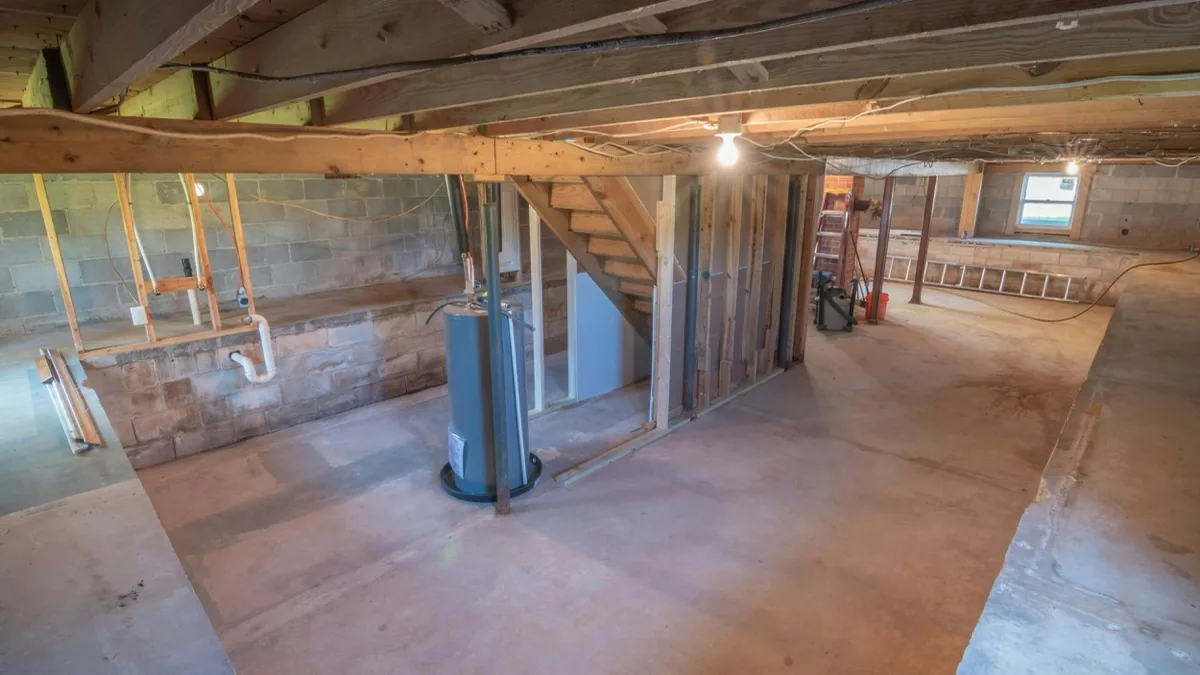
My father-in-law has a concrete block foundation. Not poured concrete like my house. Block foundations are made of individual masonry units held together by mortar. The American Concrete Institute classifies the recommended approach depends on several site-specific factors.
The Mortar Is the Weak Link
The blocks themselves are pretty strong. The mortar between them? Less so. When stress builds up in a block wall, cracks tend to follow the mortar joints because that's where the wall is weakest.
The stair-step pattern happens because the crack alternates between horizontal and vertical mortar joints. Up, over, up, over. Like climbing a staircase. Hence the name.
What's Pushing On the Wall
In my father-in-law's case, the soil outside had been pushing against the wall for decades. Clay soil expands when wet. Freezes and pushes harder in winter. Year after year, the pressure added up.
The stair-step cracks appeared at the corner where two walls meet. Corners are natural stress concentration points. When something has to give, corners often give first.
The Warning Signs He Ignored
Looking back, there were clues before the obvious cracking. According to the International Code Council, these types of issues are more common than most homeowners realize.
The Doors That Didn't Close Right
My mother-in-law had complained for years that the basement door stuck. They'd trimmed it twice. Never thought to ask why it was sticking in the first place.
Foundation movement causes door frames to shift. The door didn't suddenly grow. The house was slowly twisting around it.
The Window That Wouldn't Open
Same story with a basement window. My father-in-law blamed it on paint. "It's painted shut," he said. But it wasn't painted shut. The frame had shifted and the window was jammed.
The Tiny Crack That Got Bigger
My mother-in-law mentioned she'd noticed a small crack "years ago" but it had been small so she didn't think anything of it. By the time I saw it, you could fit a pencil in parts of it.
That progression from "small" to "pencil-sized" probably happened slowly over a decade. They just weren't paying attention.
What the Engineer Found
I convinced them to hire a structural engineer before calling repair companies. Probably saved them from getting unnecessary work done.
The Measurement Process
The engineer measured the wall at multiple points with a level. The corner section had bowed inward about an inch and a half. Not catastrophic, but definitely significant movement.
He also checked the crack width at several points. The crack was wider at the top than the bottom, which told him the movement was ongoing. Active cracking, not old stable cracking.
The Diagnosis
Classic lateral pressure damage. The soil had been pushing on the wall for years, and the wall was slowly giving in. The stair-step cracks were the result of that inward movement.
The engineer's recommendation: wall anchors to stabilize it. If they'd caught it earlier, carbon fiber straps might have been enough. But with the amount of bow already present, they needed the heavy-duty solution.
The Drainage Problem
The engineer also pointed out that their downspouts were discharging right at the foundation. All that roof water was soaking into the clay soil and making the pressure worse.
Fixing the downspouts wouldn't fix the existing damage, but without fixing them, the repairs wouldn't last.
The $14,200 Repair
Here's what actually got done.
Wall Anchors
They installed eight wall anchors along the affected wall. Each anchor is a steel plate on the inside connected to a plate buried in the yard by a steel rod. You tighten them periodically to counteract the soil pressure and potentially straighten the wall over time.
Cost for the anchors: $9,600. That's about $1,200 per anchor.
Crack Repair
The cracks themselves got filled with hydraulic cement and then waterproofed. Not structural, just cosmetic and to prevent water infiltration. Cost: $1,800.
Drainage Fixes
New downspout extensions, some grading work to direct water away from the foundation. Cost: $2,800.
Grand total: $14,200. My mother-in-law didn't speak to my father-in-law for a week. Something about how he'd ignored her when she first mentioned the door sticking.
How to Check Your Own Block Foundation
After this experience, I tell everyone with a block foundation to actually look at their walls once in a while.
Look for the Stair-Step Pattern
Walk your basement and look at the mortar joints. Any zigzag patterns where the mortar has separated? Even small ones worth noting.
Pay extra attention to corners and anywhere a window or door opening creates a stress point.
Check the Other Symptoms
Doors sticking? Windows not opening? Floors feeling uneven? These can all be foundation symptoms. Don't just fix the symptom without asking why it appeared.
The Level Test
Hold a 4-foot level against the wall vertically. Any bow inward is worth noting. More than an inch of bow means you should probably call someone.
I do this in my own basement once a year. Takes five minutes. Gives me peace of mind for the next twelve months.
Don't Wait
The earlier you catch this stuff, the cheaper it is to fix. Carbon fiber straps instead of wall anchors. Monitoring instead of repairs. The worst thing you can do is see something, shrug, and forget about it.
Trust me. I watched my in-laws learn this the expensive way.