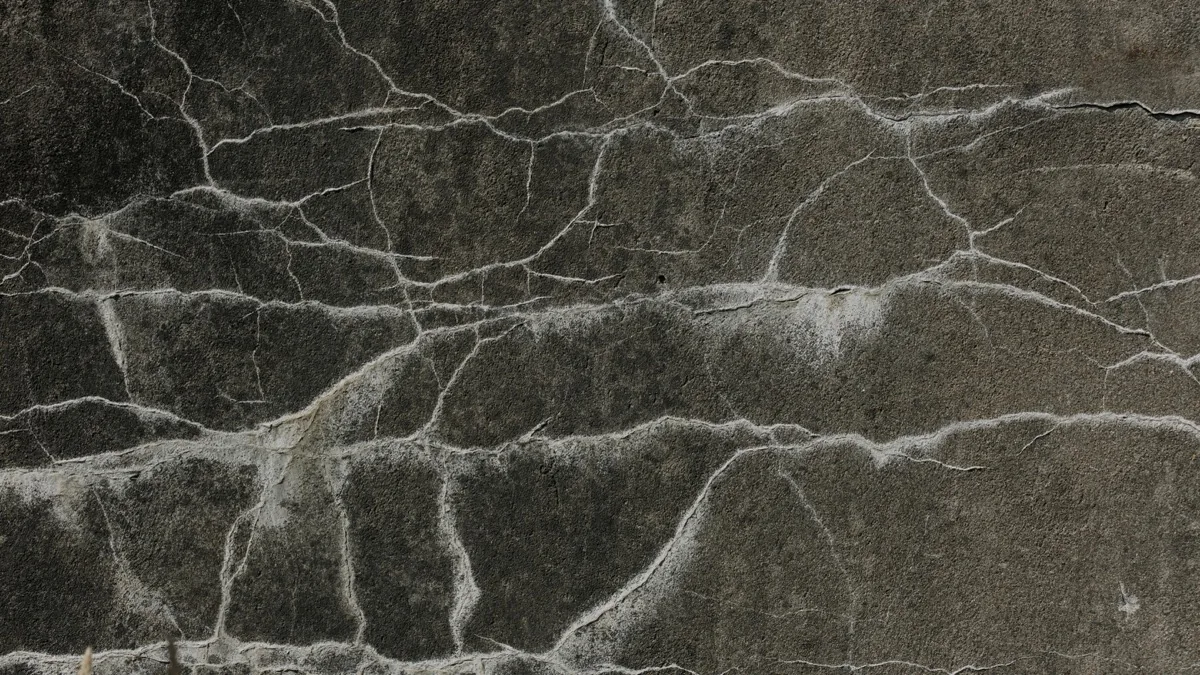
What Stucco Is and Why It Cracks on Its Own
Traditional stucco is a cement-based coating applied in layers over a wire mesh (lath) that's fastened to the wall below. It's rigid, roughly 3/4 to 1 inch thick total, and it's exposed to every temperature swing, wet season, and dry stretch your climate throws at it. Concrete expands and contracts. Stucco does the same thing. Over time, that movement creates stress, and stress in a rigid material creates cracks.
This is normal — the same reason concrete driveways crack even on perfectly stable ground. Stucco cracks at the thinnest points, at transitions between materials, and at corners of openings where stress concentrates. Synthetic stucco (EIFS — Exterior Insulation and Finish Systems) behaves differently from traditional three-coat stucco, but both types develop surface cracks that are unrelated to the foundation. The cracks look alarming. They're often in high-visibility spots. But their appearance alone tells you very little about what's going on with the structure behind them.
Crack Patterns That Are Usually Cosmetic
After years of following foundation topics, I've learned to recognize the patterns that almost always turn out to be stucco-only issues.
Diagonal Cracks at Window and Door Corners
These are probably the most common stucco cracks homeowners worry about. They run diagonally from the upper corners of windows and doors — sometimes at 45 degrees, sometimes shallower. They're extremely common and, in most cases, they're caused by stress concentrating at the corner of the opening where the stucco is thinnest.
Foundation settlement can also create diagonal cracking at openings, but it usually looks different. Settlement-related cracks tend to be wider, often tapered (wider at one end), and frequently accompanied by the window or door no longer operating properly. Pure stucco shrinkage cracks are typically uniform in width, hairline to narrow, and the windows and doors still operate fine.
Horizontal Cracks Along Lath Seams
Stucco is applied over wire mesh that comes in sheets. Where those sheets overlap or meet, you sometimes see perfectly straight horizontal cracks. These are almost always cosmetic — they follow the seam in the substrate, not any structural movement pattern. Where stucco transitions to a different material (wood trim, a window frame, or the foundation at grade) you'll also often see cracking at the joint. These are control joint failures. Maintenance issues, not structural ones.
Spider-Web or Map Cracking
A fine network of interconnected hairline cracks covering a section of wall — sometimes called crazing or alligator cracking — is almost always a stucco application problem. It means the stucco dried too fast (usually due to hot weather or direct sun during application), the mix was wrong, or the base coat wasn't properly cured before the finish coat was applied. This cracking is widespread but shallow. It's a cosmetic problem and a potential moisture entry point, but it doesn't reflect movement in the wall or foundation below.
Warning Signs That Deserve Closer Inspection
Some stucco cracks warrant a harder look. Not automatic alarm, but enough concern to bring in someone who can assess what's behind the surface.
Cracks Wider Than 1/4 Inch
Width matters. Hairline cracks in stucco are common and often cosmetic. Cracks you can fit a quarter into are different — they represent significant movement or stress somewhere in the assembly. They also create a reliable water entry path, which leads to lath corrosion, substrate rot, and actual structural deterioration over time even if the original cause was benign. Any crack wider than 1/4 inch deserves an assessment by a structural engineer or a home inspector with foundation experience.
Offset Edges
Run your hand along a crack. Do both sides feel flush, or is one side raised? Offset cracks — where the surface has actually moved so one side sits higher than the other — indicate differential movement. This can happen in stucco alone if layers have delaminated and shifted, but it can also indicate movement in the wall assembly below. Horizontal offsets in diagonal cracks may suggest shear movement. Vertical offsets can indicate settlement on one side of the crack.
Bulging or Bowing Near the Crack
If the wall surface bulges outward near a crack, that changes the picture. Bulging in stucco can mean the coating has separated from the substrate and is being pushed out by moisture expansion behind it. But it can also mean the wall underneath is bowing — a more serious concern, especially in basement walls. Hold a long straightedge against the wall. If the wall deviates noticeably from flat, get a professional involved before you do anything else.
How to Probe Beyond the Surface Yourself
There are a few simple assessments you can do before calling anyone.
The tap test: Knock on the stucco near the crack with your knuckle. A solid, dense sound means the stucco is still bonded to the substrate. A hollow sound — sometimes described as drumming — means the stucco has delaminated and separated from the layer below. Hollow sections don't always indicate structural problems, but they do mean moisture can get behind the stucco and start damaging whatever is underneath.
Check windows and doors: Open and close every door and window near the cracked area. Sticking, binding, or new gaps in the frame suggest the wall framing or foundation has moved. Doors and windows that operate normally are reassuring.
Look inside: Check the interior wall at the same location. Drywall cracks directly behind an exterior stucco crack suggest the same movement is affecting the structure all the way through. An exterior crack with a corresponding interior crack is more concerning than an exterior crack alone.
Check the foundation wall: If you have an exposed foundation wall in a basement or crawl space, inspect it in the area below the exterior cracks. If the concrete or block foundation looks intact, the stucco cracking above grade is more likely to be surface-only.
When to Call a Professional
If you have hairline diagonal cracks at window corners, spider-web crazing, or thin cracks along obvious seams — you probably don't need a structural engineer yet. You need a stucco contractor to assess whether recoating or patching is warranted, and you want to make sure water isn't infiltrating.
Get a structural engineer involved when any of these apply:
- Cracks are wider than 1/4 inch
- Crack edges are offset
- The wall bulges or bows near the crack
- Doors or windows in the area have started sticking
- You find matching interior cracks in the same location
- The foundation wall in your basement shows cracking below the exterior cracked area
The American Society of Home Inspectors has a find-an-inspector tool on their website. The Structural Engineering Institute also maintains a directory of licensed engineers. Either is a better starting point than calling a foundation repair company and asking them to evaluate whether you need foundation repairs.