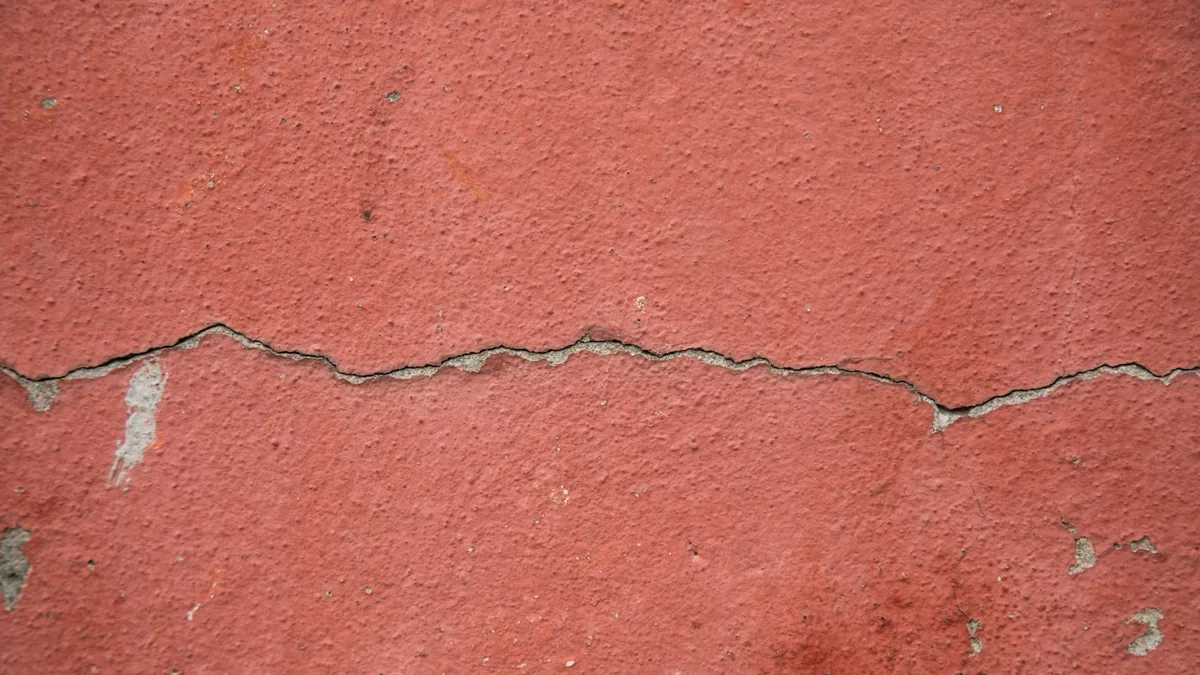
Wall-Related Warning Signs
The foundation walls themselves often show problems first. The American Concrete Institute provides guidelines that the recommended approach depends on several site-specific factors.
Horizontal Cracks
This is the big one. Russell's horizontal crack was the clearest warning sign, and he ignored it for over a year. Horizontal cracks indicate the wall is failing to resist lateral pressure from soil or water.
A horizontal crack in a basement wall is serious. It means something is pushing, and the wall is starting to give. I check my walls specifically for horizontal cracks during my inspections. So far, nothing. If I ever see one, I'm calling someone immediately.
Inward Bowing
Russell's wife said his wall "looked different" for months before they could articulate what was wrong. The wall was bowing, but gradually enough that you'd adjust to it without noticing.
I check my walls with a straightedge now. Hold it against the wall, look for gaps. Any curve or bulge indicates the wall is being pushed inward. I'd rather catch one inch of bow than wait until it's two inches.
Wall Separation
Gaps opening between the foundation wall and the floor framing above, or between the wall and basement floor below. This indicates the wall is moving independently of everything else. Serious movement.
I look at these joints during inspections. Everything should be tight against everything else.
Rotating Sections
If part of a wall has rotated so the top is moving in while the bottom stays put, that's failure in progress. Different from uniform bowing. Often more serious.
Crack Patterns That Concern Me
Beyond simple cracking, certain patterns suggest bigger problems. According to the International Code Council, these types of issues are more common than most homeowners realize.
Multiple Diagonal Cracks
One diagonal crack might be isolated settlement that happened long ago. But several diagonal cracks all pointing toward the same corner? That corner is actively settling. Multiple similar cracks suggest a pattern, not random damage.
Widening Cracks
I mark and measure my cracks specifically to catch this. A crack that's growing proves ongoing movement. Foundations are supposed to stop moving once they've settled. If cracks are still widening, something is still pushing or pulling.
Through-Wall Cracks
If a crack goes all the way through the wall, visible from both inside and outside at the same location, that's significant damage. The wall has cracked completely, not just on the surface.
X-Pattern Cracking
Cracks forming an X indicate shear stress from opposing forces. Lyle showed me photos from earthquake damage that had this pattern. Not common in my area, but something I'd recognize if I saw it.
Whole-House Symptoms
Foundation problems often show up upstairs before they're obvious in the basement.
Doors That Stop Working
Russell's front door started sticking about six months before they noticed the basement crack. He blamed humidity. He trimmed the door. In reality, the door frame was racking because the foundation below it was moving.
One sticky door in summer humidity is normal. Multiple doors that used to work and now don't? Foundation movement.
Drywall Cracks at Openings
Diagonal cracks from the corners of doors and windows indicate the frame is being twisted. The foundation moves, the stress transmits up through the frame, and the drywall cracks where it's weakest.
One small drywall crack is settling paint or minor movement. Multiple cracks at multiple openings is a pattern that points to the foundation.
Sloping Floors
I check my floors with a marble. If it rolls consistently in one direction, the floor slopes. Some slope is normal in old houses. New slope, or slope that's getting worse, might indicate foundation settlement.
Russell's living room floor started sloping toward the front of the house. Toward the corner above his bowing wall. It was all connected.
Gaps at Walls and Ceilings
Separation between walls and ceiling, gaps opening at corners, crown molding pulling away. These indicate different parts of the house moving in different directions. Often traced back to foundation issues.
Soil and Drainage Warning Signs
Problems around the foundation can predict problems with the foundation.
Settling Soil Along Foundation
If soil is pulling away from the foundation or settling to leave gaps, the backfill is compacting. This can change how water drains and how pressure is distributed against the walls.
Water Pooling Near Foundation
Standing water after rain indicates drainage problems. Water pooling against the foundation causes problems over time. Russell's drainage wasn't great. The wet spring that accelerated his wall bowing was partly predictable.
Sinkholes or Depressions
Unexpected depressions in the yard near the foundation suggest underground erosion. Tom's plumbing leak created a visible depression where soil had washed away underground. Worth investigating if you see this.
What I Do When I See Warning Signs
Early action is cheaper than late action.
Document
Photos with dates. Measurements. Notes on when things first appeared. This documentation helps professionals assess the situation and tracks whether things are getting worse.
Monitor
Set up tracking for cracks and other symptoms. Check regularly. Know whether problems are stable or progressing. Data beats intuition.
Get Professional Assessment
For serious warning signs, pay for a structural engineer's opinion. $350-500 is cheap compared to the cost of either unnecessary worry or missed problems.
Russell could have had his wall assessed when the horizontal crack first appeared. The repair might have been half as expensive back then.
Act on Recommendations
If professionals say repairs are needed, don't defer indefinitely. Foundation problems get worse over time. Early intervention costs less than waiting.
Russell waited. His wall bowed from maybe half an inch when he first noticed the crack to an inch and a half when he finally acted. More bow meant more anchors. More anchors meant more money.